Transforming the lives of people living with cardiovascular diseases
Safe Hearts: Working together to tackle Europe’s #1 killer

Health impact
Cardiovascular disease is the leading cause of mortality and morbidity in Europe.
Each death is a profound loss to a family, to a community and to society. The majority of deaths could be avoided through public health and prevention measures combined with timely and effective health care interventions.
People who survive cardiovascular events, such as stroke, may suffer long-term disability. Rehabilitation services and quality of life support are essential to the overall wellbeing of individuals and families.
Cardiovascular health facts
- Cardiovascular diseases are Europe’s #1 killer
- One in three deaths in the EU is linked to cardiovascular disease.
- More than 60 million people are living with cardiovascular diseases in the EU
- Every day 5,000 Europeans lose their lives due to CVD like heart attacks or strokes
Economic and societal burden
In addition to the deep impact on people’s health, cardiovascular diseases take a heavy toll on our economies and societies. Decreased productivity and economic output arising from cardiovascular conditions costs the EU more than €282 billion per year.
This burden is not evenly spread across the EU. Geographical, gender and socioeconomic inequalities shape an individual's risk of cardiovascular disease, as well as influencing their outcomes.
The health, economic and societal burden of cardiovascular diseases is expected to rise in the coming years, adding to pressure on our health systems. That is why it is essential that the EU takes swift and decisive action, with the support of all stakeholders.
Our mission: Improve CVD patients’ lives
The EFPIA Cardiovascular Health Platform represents companies committed to R&D in cardiovascular disease. Together, we aim to highlight the importance of early detection, timely diagnosis, and secondary prevention for improving lives in Europe.
Decades of progress have expanded clinicians’ capacity to add years to life by reducing premature mortality, and to add life to years by, for example, managing the risk of stroke. We can do more by addressing patients’ unmet needs and working to improve access to high-quality care.
The Platform strives to highlight the cost effectiveness of investing in cardiovascular health not only to save lives, but also to safeguard the sustainability and resilience of healthcare systems and the economy.
We aim to build evidence to drive better policy proposals and innovative solutions. The Platform actively supports the European Alliance of Cardiovascular Health (EACH) in its efforts to boost policy action and awareness together with 16 partner organisations.
Why cardiovascular health checks: The case for EU action
To effectively address this pressing burden of CVH, in December 2025 the European Commission launched the EU Safe Hearts Plan. The proposal for a Council Recommendation on health checks is a core component of the Safe Hearts Plan. This is a golden opportunity to step up early detection, improve outcomes across the EU, and save costs for health systems and societies.
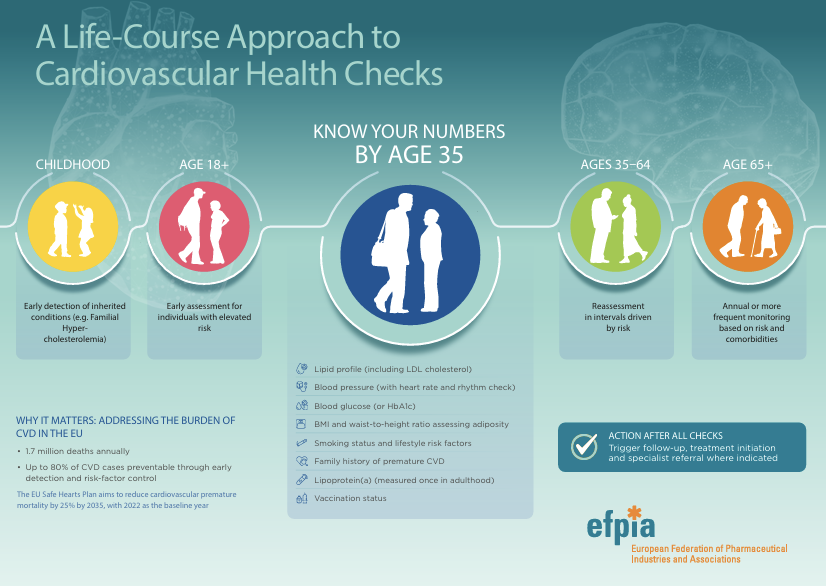
Download the report
Unlocking the Value of the Cardiovascular Health Checks
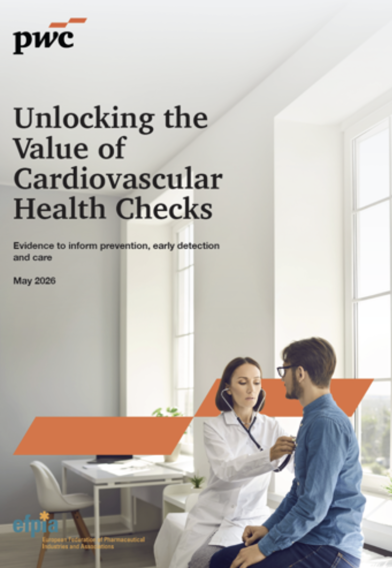
To support this momentum, the EFPIA Cardiovascular Health Platform commissioned an independent study by PwC to generate evidence on the value of cardiovascular health checks and to inform the next phase of policy action.
The study provides a structured and comprehensive review of the clinical, economic and societal value of cardiovascular health checks, drawing on recent literature and real-world programme experience.
The report shows that well-designed cardiovascular health checks, embedded in strong primary care systems and linked to effective follow-up, can be a powerful lever for prevention and an important driver in reducing avoidable cardiovascular mortality across the EU, in line with the ambitions set out in the Safe Hearts Plan.
Download the report
Improving Secondary Prevention of Cardiovascular Disease in Europe
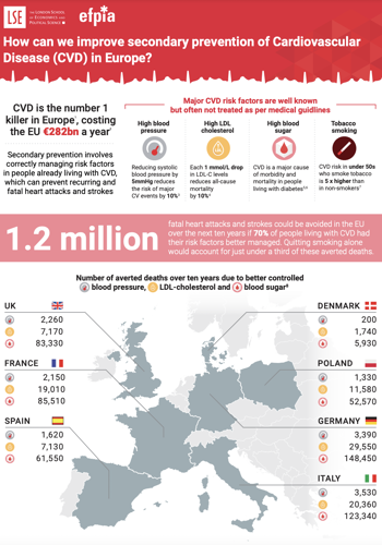
A study by the London School of Economics and Political Science (LSE), commissioned by EFPIA CVH Platform, shows the opportunity of secondary prevention to save hundreds of thousands lives.
The report features six recommendations that can reduce the risk of fatal heart attacks and strokes in people living with CVD, by following medical guidelines. Appropriate management of high cholesterol, high blood pressure, high blood glucose and smoking, while encouraging healthier diets and physical activity, can reduce the risk of death from repeat heart attacks and strokes.
In fact, the report proposes that more than 1 million fatal CVD events could be avoided in the EU over the next 10 years if 70% of people living with CVD had their risk factors better managed than they are today.
Download the report
Towards better cardiovascular health in Spain
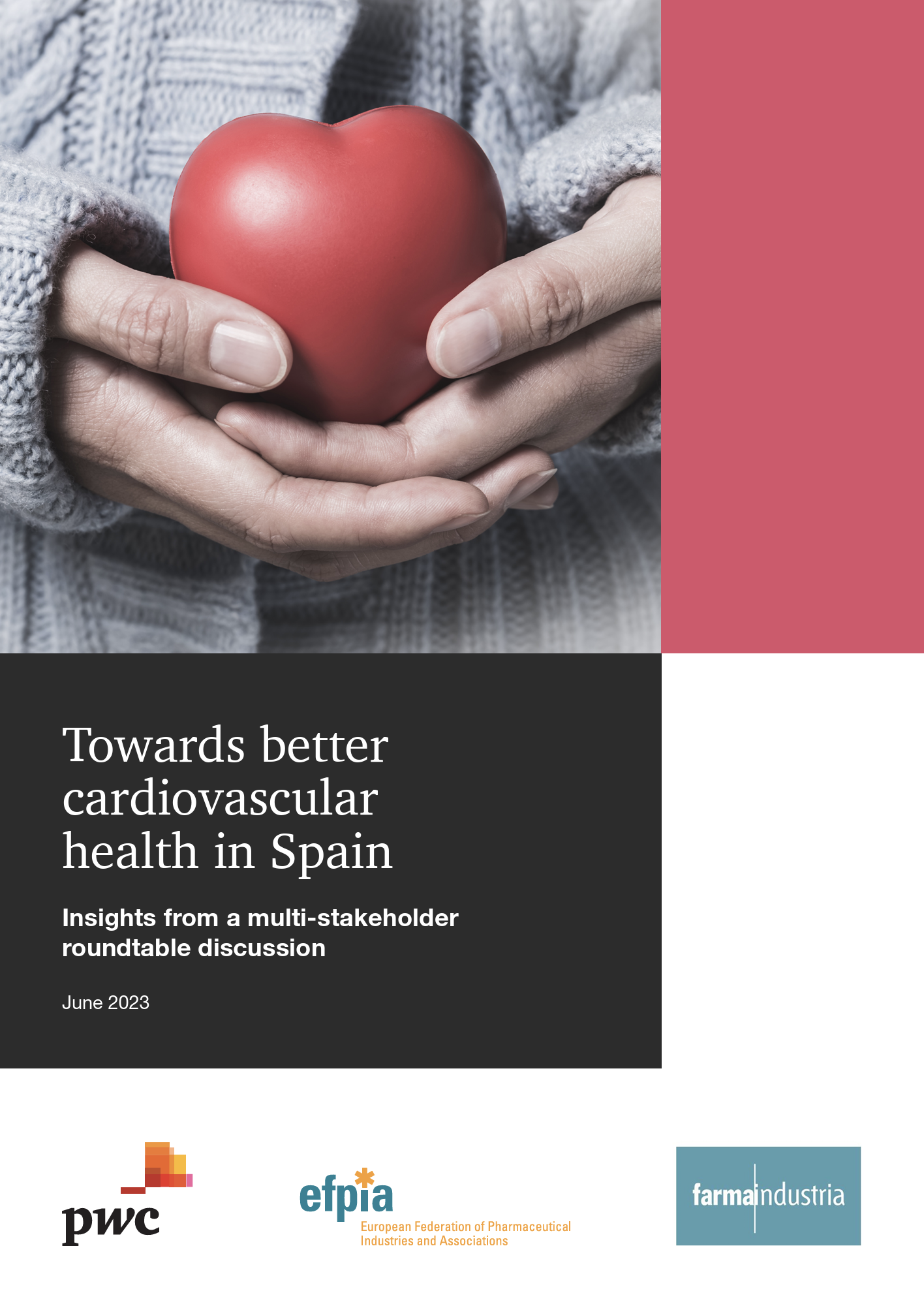
Cardiovascular diseases are the main cause of hospitalisation and death in Spain, with its overall economic impact growing by 20% between 2014 and 2020.
Download the report
Towards better cardiovascular health in Poland
In Poland, cardiovascular healthcare is one of the key challenges for the healthcare system, with cardiovascular disease (CVD) among the leading causes of death and hospitalisation.
Download the report
Towards better cardiovascular health in the Netherlands
Cardiovascular disease remains one of the leading causes of death across Europe, including in the Netherlands, and places a heavy burden on individuals, families and healthcare systems.
Download the report
-
Prevention, early detection and intervention: how the EU Cardiovascular Health Plan could transform health in Europe
EFPIA welcomes the forthcoming EU Cardiovascular Health (CVH) Plan which will deliver much-needed political momentum for improving health in Europe.11.09.25Read Article -
EFPIA response to EPSCO meeting
Today’s EPSCO meeting covered a number of health files. EFPIA particularly welcomes the adoption of council conclusions on cardiovascular health. With an increase in chronic disease associated with an aging population – and the pressure this brings to health systems - robust prevention, treatment and management policies are required to tackle a disease which kills more people in Europe than any other.03.12.24Read Article -
Cardiovascular disease: LSE-report highlights life-saving potential of secondary prevention
More than 1 million fatal heart attacks & strokes could be prevented with better management of four risk factors23.01.24Read Article -
Prevention, Use of Health Data and Healthcare Equity: Key Factors for Improving Cardiovascular Health in Spain
Farmaindustria, EFPIA and PwC presented a report titled “Towards a Better Cardiovascular Health in Spain”, which analyses the current situation as well as key areas for improvement.14.06.23Read Article -
How is your country treating your heart? (Guest blog)
A set of CVD data across 22 European countries to see how CVD trends have developed over time, the existing disparities between countries and what key actions can be taken to make a positive difference.12.06.23Read Article -
Boosting health in Europeans: Introducing a cardiovascular & diabetes health check (Guest blog)
Health Checks are an investment in millions of lives26.01.23Read Article