Online
26.11.26 - 26.11.26
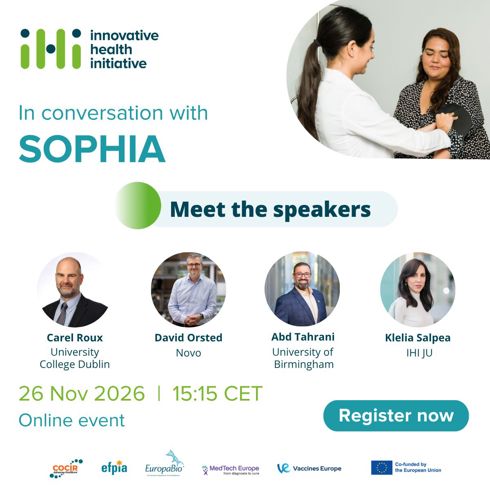
Join us online on 26 November at 15:15 to find out how the SOPHIA project unlocked new insights into which patients are more likely to suffer from complications related to obesity, and which patients will respond best to different treatments.
Join us online on 26 November at 15:15 to find out how the SOPHIA project unlocked new insights into which patients are more likely to suffer from complications related to obesity, and which patients will respond best to different treatments.
In 2024, 1 in 7 people in the world were living with obesity. Adult obesity has more than doubled since 1990, and adolescent obesity has quadrupled. This can have severe consequences for individuals – obesity elevates a person’s risk of experiencing health complications like heart disease, diabetes and cancer.
SOPHIA made great strides into developing a better understanding of this field - find out more by joining our webinar.

What you will find out: