Enhancing understanding: The importance of effective communication materials in the pharmaceutical industry
05.07.26
Clear, easy-to-understand information can help patients make informed decisions, follow their treatment plans correctly, and feel more confident in managing their health.
The importance of creating understandable, patient-friendly communication materials with consistent strategies cannot be overstated. Pharmaceutical companies produce a wide variety of communication materials to help patients understand their medications and treatments. Some common examples include Patient Information Leaflets (PILs), Informed Consent Forms (ICFs), Risk Minimisation Materials, Plain Language Summaries (PLSs), and clinical study recruitment materials, among many others.
Clear, easy-to-understand information can help patients make informed decisions, follow their treatment plans correctly, and feel more confident in managing their health. Additionally, a lack of understanding of the materials patients receive can be a significant contributor to non-adherence. Non-adherence to medications for chronic diseases, which stands at a staggering 50%, results in up to 50% of treatment failures. This issue is further magnified when considering the 200,000 lives lost annually in the EU due to non-adherence and the significant economic burden of €80–125 billion every year.
Given this important need to create patient friendly communication materials, a group of 8 professionals working within EFPIA member companies and with around a century of collective experience in patient-centric communication and/or working with members of the patient community has developed the practical guide “Enhancing Understanding: The Importance of Effective Communication Materials in the Pharmaceutical Industry”
General Principles and strategies to stimulate Patient Centric Communication
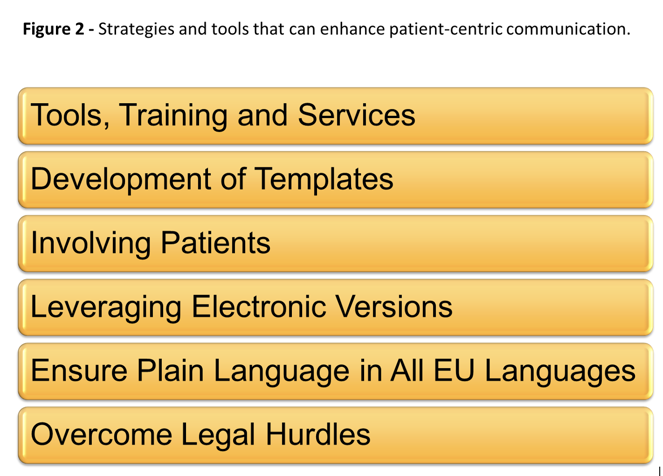
Effective patient-friendly communication in the pharmaceutical industry relies on several key contributors as highlighted in figure 1 and several strategies and tools can be employed to implement these principles as highlighted in figure 2.
One critical strategy is actively involving patients in the development of materials. For example, conducting qualitative focus group discussions with patients can provide valuable insights into their needs and preferences, ensuring that the materials reflect their real-life experiences and challenges.
Leveraging electronic formats can also significantly enhance the accessibility and engagement of medical information. Incorporating interactive multimedia elements such as videos allows for a more engaging presentation of complex information, helping patients better comprehend key concepts related to their health.
Conclusion
As we look to the future, there is hope for a transformative shift in how we engage with patients. We encourage all stakeholders—regulatory bodies, healthcare professionals, patient organizations, and industry members—to actively participate in constructive dialogue. Together, we can create the necessary flexibility within regulatory frameworks to implement these patient-centric principles without compromising safety.
Moreover, harmonization across regions is essential to ensure consistency in communication while respecting cultural and linguistic diversity. By collaborating on best practices and tools, we can enhance the clarity and accessibility of information for all patients.
We invite you to read this paper and join us in this important journey towards improving health literacy and patient safety.