close

Why cardiovascular health checks: The case for EU action

Cardiovascular diseases (CVDs) account for approximately 1.7 million deaths each year, affect around 62 million people, and generate economic costs exceeding EUR 282 billion annually. Early detection and prevention should be viewed as long term investments in health system sustainability. To effectively address this pressing burden, in December 2025 the European Commission launched the EU Safe Hearts Plan. The proposal for a Council Recommendation on health checks is a core component of the Safe Hearts Plan. This is a golden opportunity to step up early detection, improve outcomes across the EU, and save costs for health systems and societies.  

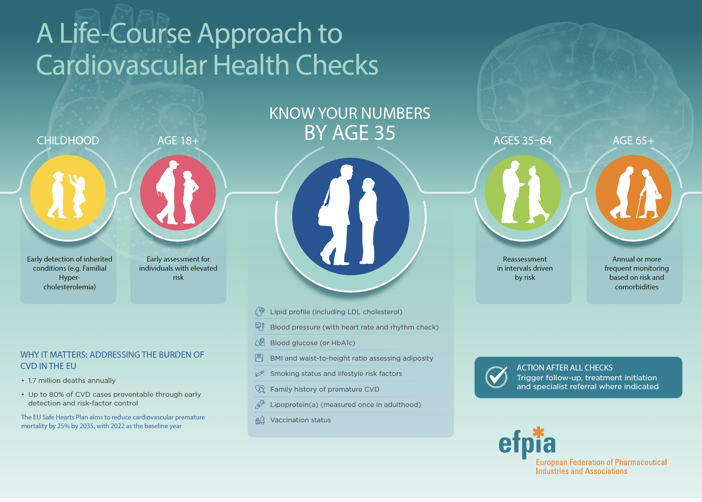
A health check is a routine appointment with a primary care provider where key aspects of heart and metabolic health (e.g. blood pressure, cholesterol, blood sugar and weight) are reviewed. The aim is to detect early signs of potential health risks, and to guide timely prevention or treatment. If any of the results are outside of the recommended range, the healthcare provider will suggest a clear plan to address them, which may include lifestyle changes, treatment and follow-up care. Health checks can be implemented as part of population wide programmes (like Greece’s Prolamvano), opportunistic screening (as part of interactions between the citizen and the health system) and targeted screening programmes.

EFPIA position on cardiovascular health checks

Unlocking the Value of Cardiovascular Health Checks

To support this momentum and reinforce the evidence base, the EFPIA Cardiovascular Health Platform commissioned an independent study by PwC to generate evidence on the value of cardiovascular health checks and to inform the next phase of policy action. The study provides a structured and comprehensive review of the clinical, economic and societal value of cardiovascular health checks, drawing on recent literature and real-world programme experience.

The report is distinctive in bringing these dimensions together in a single, policy-relevant analysis, while also highlighting a critical insight: the value of cardiovascular health checks depends not on screening alone, but on thoughtful programme design, effective follow-up and integration into care pathways. In doing so, it helps focus the public debate towards how health checks can be implemented to deliver the greatest benefit.

Well-designed cardiovascular health checks, embedded in strong primary care systems and linked to effective follow-up, can be a powerful lever for prevention and an important driver in reducing avoidable cardiovascular mortality across the EU, in line with the ambitions set out in the Safe Hearts Plan.