#WeWontRest until Alzheimer’s patients have a brighter future
Taking action together to ensure a better today and tomorrow for people with Alzheimer’s disease
To ensure a brighter today and tomorrow for people with Alzheimer’s disease
What is unique about Alzheimer’s disease
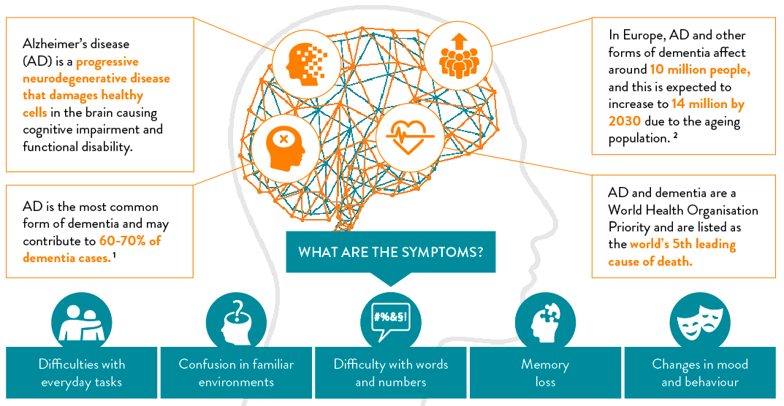
AD progresses in stages, with a long silent phase starting before its symptoms appear. Currently approved treatments help to alleviate some of the symptoms but there are no disease-modifying therapies (DMTs) that modify the disease, reverse or slow down its effects. Disease-modifying therapies would allow patients to live an independent life for longer, and maintain their cognitive capabilities and personality, leaving them more time with their friends and family.
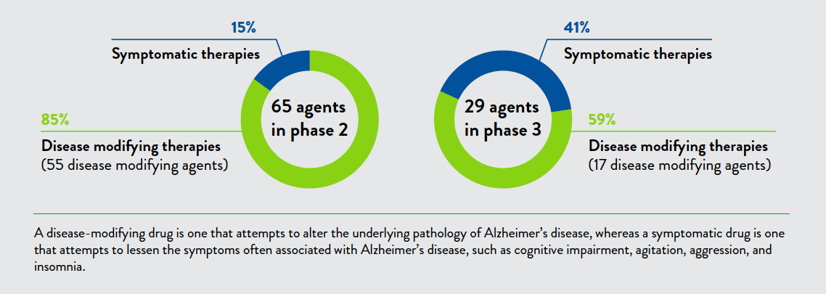
The research community has traversed numerous frustrating setbacks over the past few years, which explains the long wait for a disease-modifying treatment. However, the history of Alzheimer’s Disease is a story of perseverance, commitment and hope. The industry’s dedication to finding a cure can be evidenced by the continued unfaltering drug development pipeline. In early 2020, there were 136 trials investigating AD therapies which have the potential to significantly reduce the burden on affected people living with the disease, their carers, and healthcare systems across Europe [3].
You can find out more about individuals commitment to tackling Alzheimer’s disease here.
It is time for European healthcare systems to prepare for Alzheimer’s breakthroughs
No organisation can address the challenges related to Alzheimer’s disease in isolation. As we have highlighted in the paper "Taking Action Together to Ensure a Better Today and Tomorrow for People with Alzheimer’s Disease", patients can only benefit from advances in treatment if healthcare systems are appropriately equipped to enable patient access to innovation along the whole of the disease pathway.
We are at a turning point in our fight against Alzheimer’s Disease. Long-awaited new therapies are on the horizon. The introduction of upcoming disease modifying therapies would have the potential to change the lives of both patients and carers and to substantially reduce the societal and economic burden of the disease.
For people living with dementia, their carers, and society to benefit from these innovations, clinical practice will have to transform and adapt. Healthcare systems in Europe currently lack the capacity to detect early, diagnose and treat AD effectively, hindering the ability to rapidly move a disease modifying therapy (DMT) for AD from approval into widespread clinical use. This could leave a large number of patients without access to transformative care when a DMT reaches the market.
To ensure we translate these breakthroughs into results for patients, Europe must prepare. 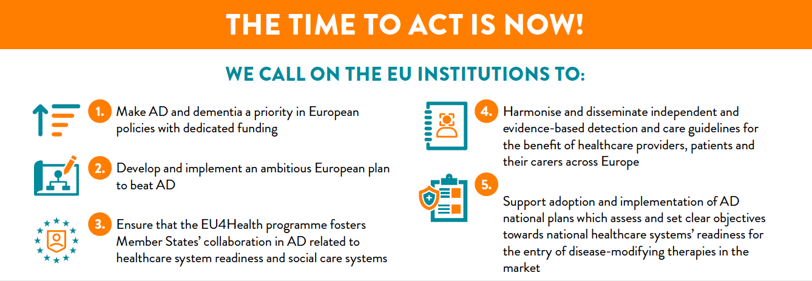
19 Conversations | The EFPIA podcast series
IMI & IHI Alzheimer’s disease-related projects
IMI and IHI Alzheimer’s disease projects have advanced understanding of Alzheimer’s pathology and progression, generated new tools and platforms for early detection and monitoring, supported more precise trial methodologies, and are building digital systems to personalise and improve diagnosis and care.
Together they strengthen the ecosystem for Alzheimer’s research and accelerate progress toward earlier intervention, meaningful biomarkers, better clinical trial design, and real-world use of innovative treatments.
Across IMI and IHI projects, the key contributions include:
- Enhanced biological knowledge of Alzheimer’s pathology and novel biomarkers for earlier and more precise detection.
- Improved early diagnosis and prediction systems that can identify individuals before severe symptoms manifest.
- Real-world digital monitoring and functional endpoints that capture the lived impact of disease.
- Decision support platforms that integrate data to personalise care and inform clinical choices.
- Tools and infrastructure that strengthen clinical research and reduce barriers to effective therapeutic development.
Together, these efforts help build a more integrated, patient-centred and data-driven ecosystem for Alzheimer’s research, diagnosis, care and therapeutic innovation in Europe — accelerating progress toward earlier detection, better interventions and tangible improvements in patient outcomes.
More information on these projects can be found on the IHI website here.

Featured article
Putting people with Alzheimer’s disease at the centre of their healthcare journey
How listening can transform dementia care.
Read more
Our latest publications
- Future-proofing the Alzheimer's disease healthcare journey get_app
- Rethinking Alzheimer's Disease White Paper, From Diagnosis To Care, 2024 get_app
- Rethinking Alzheimer's Disease White Paper, Detection And Diagnosis, 2023 get_app
- Early Detection And Diagnosis of Alzheimer's Disease get_app
- #WeWontRest until Alzheimer’s patients have a brighter future get_app
- Alzheimer’s Disease Health System Readiness – The Time to Act is Now get_app
- Taking Action Together to Ensure a Better Today and Tomorrow for People with Alzheimer’s Disease get_app
Future-proofing Alzheimer’s care: Scaling innovation for a healthier Europe.
Watch the webinar recording.
Videos
Blogs and press releases
-
Putting people with Alzheimer’s disease at the centre of their healthcare journey
How listening can transform dementia care.18.09.26Read Article -
Alzheimer's disease can't wait: the economic case for Europe to act now (Guest blog)
As we mark World Alzheimer's Month, attention is once again focused on the millions of people across Europe affected by dementia.15.09.26Read Article -
From readiness to reality: preparing Europe for the next phase of Alzheimer’s care (Guest blog)
Europe has reached a turning point on Alzheimer’s disease, where scientific breakthroughs are no longer theoretical, but demand urgent action to turn innovation into real, equitable care for patients and families.20.01.26Read Article -
Alzheimer’s disease: future-proofing the healthcare journey in Europe
A new EFPIA report highlights emerging best practices as novel therapies, biomarkers and digital innovations offer fresh hope for patients25.09.25Read Article -
‘I may have Alzheimer’s, but it doesn’t have me.’
What do patients want? Quality time with loved ones and hope for a meaningful life after diagnosis08.10.24Read Article -
Rethinking Alzheimer's Disease: A Call to Action for Early Detection and Diagnosis
Charting a course to improve early detection and timely diagnosis of Alzheimer’s in Europe21.09.23Read Article -
Improving Understanding of Epidemiology and Impact of Alzheimer’s Disease (Guest blog)
World Alzheimer's Day21.09.22Read Article -
Why don’t we have earlier detection of Alzheimer’s disease in primary care? (Guest blog)
The IMI funded MOPEAD project investigated the key challenges of Alzheimer's early detection, and recognised general practitioners as essential for the shift to timely diagnosis.29.09.21Read Article -
Alzheimer’s treatments in development could launch a new era in dementia care (Guest blog)
With new therapies on the horizon, we may be at a turning point. Patients, experts and industry agree that now is the time to prepare for a better future16.12.20Read Article
[1] Alzheimer Europe, Cost of illness and burden of dementia in Europe – Prognosis to 2030, www.alzheimer-europe.org/Research/European-Collaboration-onDementia/Cost-of-dementia/Prognosis-to-2030
[2] Alzheimer Europe, Dementia in Europe, Yearbook 2019, https://www.alzheimer-europe.org/Publications/Dementia-in-Europe-Yearbooks
[3] Cummings et al. Alzheimer’s Disease Drug Development pipeline: 2020, Alzheimer’s Dement. 2020;6:e12050